
The Story Behind Kintsugi


There is something inherently beautiful about an object that carries its history with it. A mark, a fracture or an irregularity can tell a story that perfection simply cannot.
This philosophy sits at the heart of kintsugi, the centuries-old Japanese art of repairing broken ceramics with gold and the inspiration behind our new Kintsugi art series.

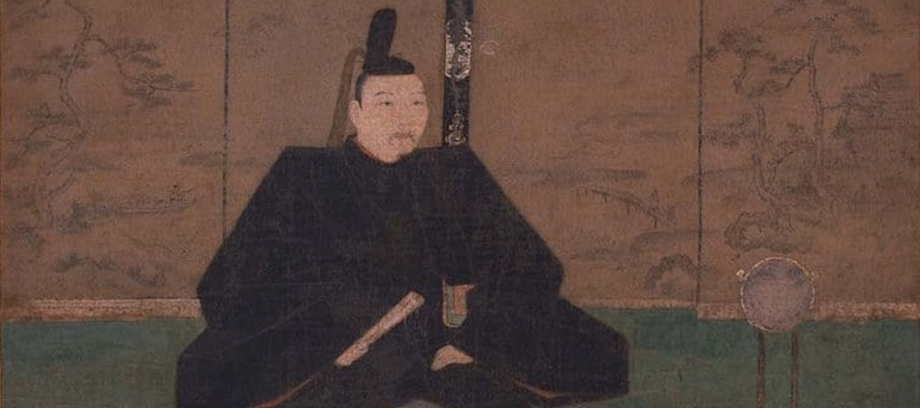
The story of kintsugi is often traced to 15th-century Japan, when a treasured tea bowl belonging to shogun Ashikaga Yoshimasa was broken and sent away to be repaired.
When the bowl returned, its fractures had been secured with metal staples. Rather than accepting a repair that simply held the broken pieces together, Japanese craftspeople sought a more considered and beautiful way to restore what had been damaged.
What emerged was kintsugi, literally “golden joinery” — the Japanese art of repairing broken ceramics using lacquer, traditionally finished with powdered gold or another precious metal.
Instead of disguising the damage, kintsugi does the opposite. Each fracture becomes part of the object, its history deliberately left visible and often illuminated in gold.
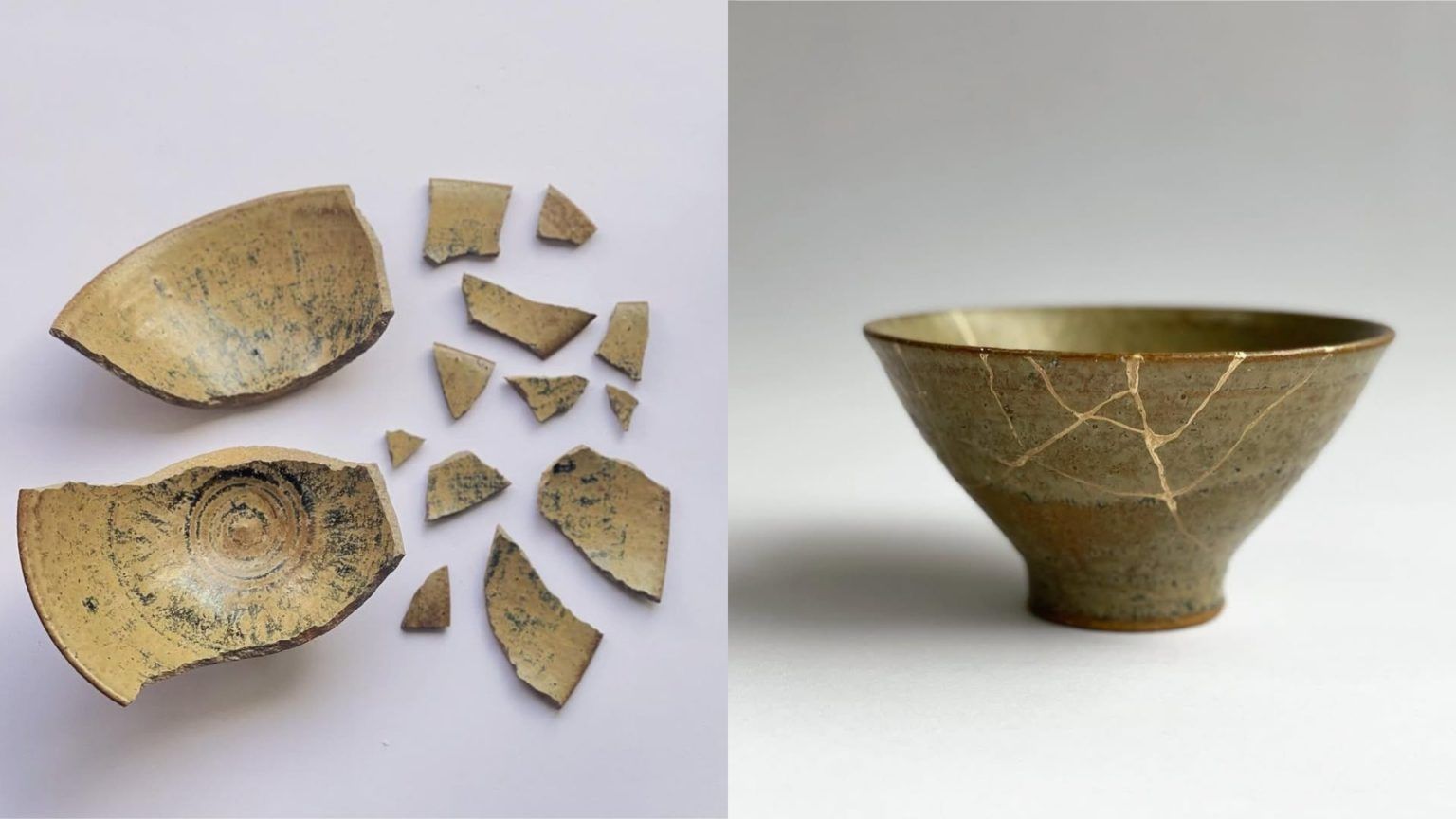
The intention is not to return the piece to exactly what it was before. It becomes something new — its history visible, its imperfections honoured and its character transformed.

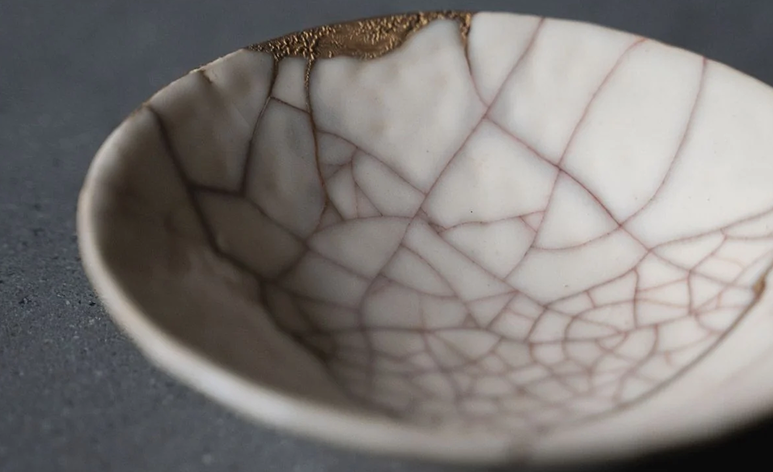
At the heart of kintsugi is the belief that beauty does not depend on remaining untouched. The marks left by time and change become part of an object’s story rather than something to conceal.
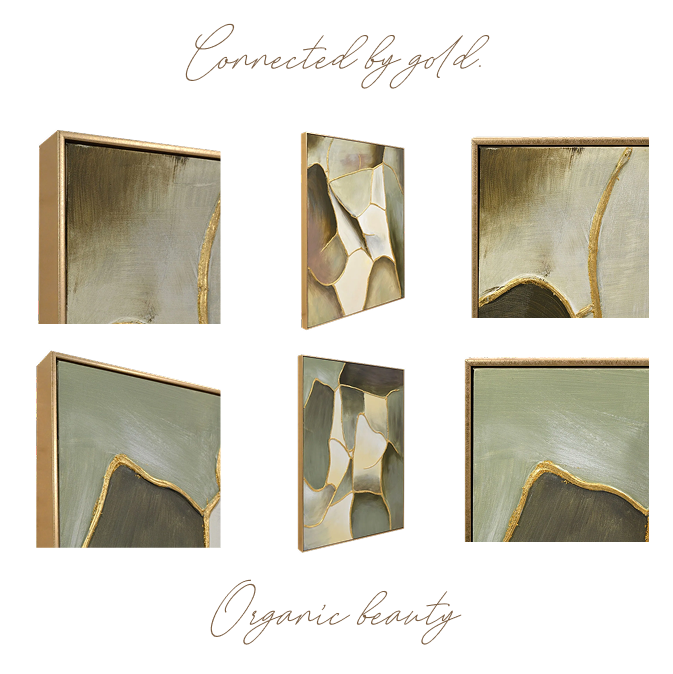
Rather than blending these forms into one seamless surface, raised gold detailing traces the spaces where they meet, visually joining each element while allowing its individuality to remain.
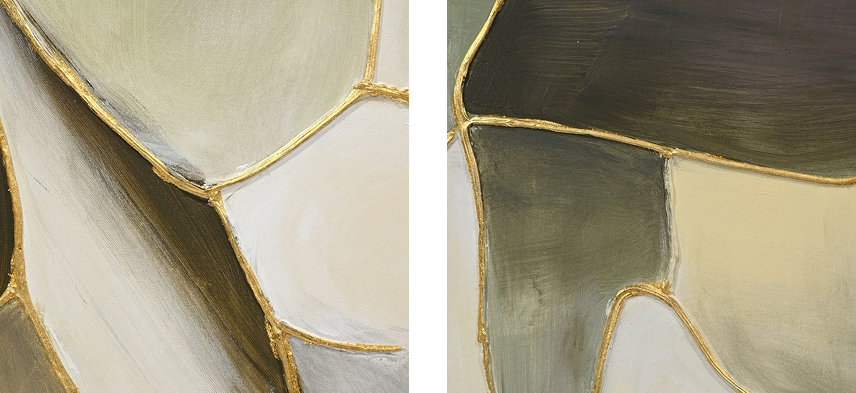
Seen up close, they appear as separate fragments. Step back, and those fragments become a complete composition. Much like traditional kintsugi, the beauty lies not in making every part the same, but in how the individual pieces are brought together to create a beautiful whole.

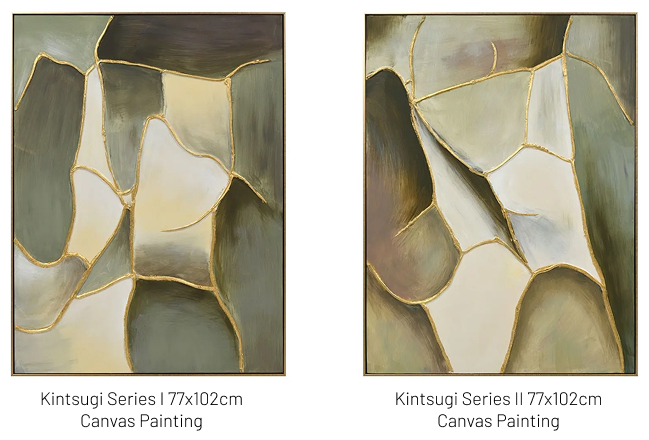
Our new Kintsugi Series translates this sentiment into art for the contemporary interior.
Organic forms in sage, olive, chocolate, cream and warm taupe create a grounded, nature-inspired palette, while raised gold-leaf veining moves through each composition like the gilded fractures of traditional kintsugi. Rather than concealing the divides between forms, the gold draws attention to them.
The result is a collection with depth and movement, where every line becomes an intentional part of the artwork. Hand-painted detailing and layered texture give each canvas a tactile, artisan quality, while the slimline gold PS frame provides a refined finishing detail that complements the metallic veining within.
At 77cm wide × 102cm high, each artwork is generously proportioned to create presence without overwhelming a scheme, making it considered for living rooms, entries, bedrooms, hospitality spaces and styled projects. Each piece weighs 2kg and arrives fitted with two metal D-rings and wire, ready for installation.
Artwork Details
Overall Dimensions: 77cm W × 4.5cm D × 102cm H
Painting Dimensions: 75cm W × 3cm D × 100cm H
Weight: 2kg
Finish: Hand Painted
Frame: Gold PS Frame
Hanging: 2 metal D-rings with wire

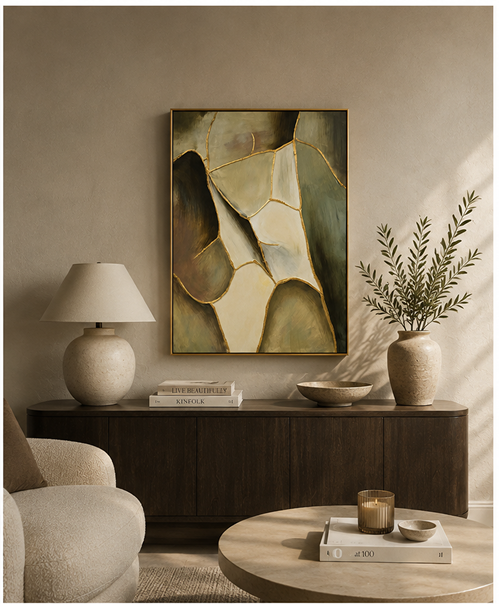
The Kintsugi Series has been created to bring texture, warmth and quiet character to an interior.
Its earthy palette sits naturally alongside warm timbers, stone, neutral upholstery and antique brass finishes, while the raised gold detailing introduces just enough contrast to create a focal point.
The scale makes each artwork versatile enough to sit above a console, sofa, dining space or within a considered gallery arrangement. Displayed individually, each composition adds subtle movement to its interior; styled together, the relationship between their organic forms and gilded lines creates a stronger visual statement.
From residential interiors to hospitality spaces and styled showrooms, the collection offers a considered finishing layer — one that reveals more of its texture and character the closer it is viewed.
And perhaps that is where the connection to kintsugi is felt most strongly.
Not in an attempt to recreate something ancient, but in a shared appreciation for the marks, differences and details that celebrate individuality.
